
Post-game recovery youth hockey nutrition comes down to one window: the first sixty minutes after she’s off the ice. Part 5 of 9 in the Athlete Nutrition series, built from the weekly nutrition tips in the Hockey IQ book. New here? Start with the Nutrition Basics intro. Sometimes I wonder how we give so little priority to recovery. My 18- and 17-year-old daughters both wear a WHOOP, and we’re in a family group together, a friendly family workout competition that gets less friendly around the end of the month. What the group also shows me, whether I want to see it or not, is their recovery. And I noticed that my 17-year-old, a varsity hockey player, has terrible recovery scores during her hockey season. Look at her day and it isn’t a mystery. On the ice before school. A full class schedule. More practice after. Then she catches up on homework until 11 pm before she finally gets some sleep, and does it again the next morning. She’s not alone; this is the schedule of just about every high school varsity athlete I know. And while I believe there’s a much-needed debate about the workload, the sleep deficit, and the pressure these teenagers are carrying, that’s a different post. This post is about what will actually help their recovery inside the schedule they have, and how nutrition can offset some of it. Because the one part of that day I can influence in under an hour is what goes into her in the first sixty minutes after she gets off the ice.
Post-Game Recovery Youth Hockey: The Tip From the Book
The first 30–60 minutes after a game is the best time to recover. Your muscles absorb nutrients faster after exercise. That’s post-game recovery youth hockey in one line: carbs and protein, together, in the first hour. Think of the muscles right after a hard game as a sponge that’s been wrung out. In that first hour they soak up whatever you give them: carbs to refill the energy stores, protein to start repairing. Give them nothing and they refill slowly, and tomorrow’s practice feels heavier than it should. Give them the right thing and the next day looks like a different kid. For an athlete who can’t add an hour of sleep, this window is the lever that’s actually available.
The Formula: Carbs + Protein, Together, Within 60 Minutes
Immediate after practice recovery examples from the book, and Nemours Children’s Health has similar guidance for young athletes on nutrition and recovery, including chocolate milk as a recovery blend:
- 🟨🟥 Chocolate milk
- 🟥🟩 Yogurt + fruit
- 🟥🟨 Turkey sandwich
- 🟥🟨 Smoothie with fruit and milk
The appendix rule is the one to remember: If it has carbs + protein, it works.
The Recovery Dinner
The real repair work happens at the recovery meal that follows, and post-game recovery youth hockey doesn’t stop after the first hour. After a game or a hard practice, dinner needs to be built around the foods that actually rebuild muscle:
- 🟥 Chicken, steak, or eggs for the protein that repairs the tissue she just broke down. Lean beef gets a spot on the list on purpose; it’s also one of the best sources of iron, which carries oxygen to the muscles and is something a lot of teenage girls run short on.
- 🟧🟩 Nuts on the side, in a salad, or a handful on the way out the door. Healthy fats for recovery and hormones, plus magnesium, which helps muscles relax.
- 🟪 Blueberries (or any dark berry) for antioxidants. The book’s line on this is the one I use: training creates stress, antioxidants help clean up after it.
- 🟨 Carbs on the plate, always. Rice, potatoes, pasta, or bread, because protein alone doesn’t refill the tank.
The appendix at the back of the book has a whole list of after-the-game options that hit carbs and protein together, and most of them can be a meal or a snack depending on how hungry she is.
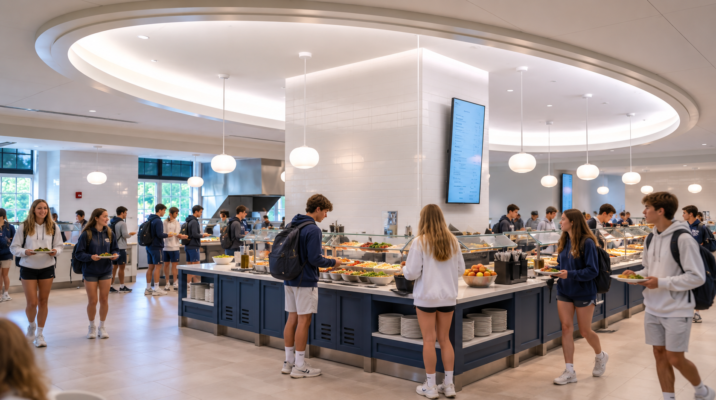
Here’s the twist in our house: two of my daughters are at boarding school, so I’m not the one putting the plate in front of them anymore. The dining hall is. Which is exactly why this list matters more, not less. A kid who knows what she’s looking for can build a recovery plate out of almost any dining hall line: the grilled chicken instead of the pizza, eggs at the omelet station, rice or potatoes on the side, a handful of nuts from the salad bar, blueberries from the fruit bowl.
Post-Game Recovery Youth Hockey Recipe: The Locker Room Wrap (+ a Chocolate Milk)
No cooking. About 5 minutes. Make it before you leave for the rink, wrap it in foil, and put it in a small cooler bag with a chocolate milk. It’s ready the second she’s off the ice, and it survives the bottom of a hockey bag better than anything else we’ve tried. You need:
- 1 large flour tortilla 🟨
- 3–4 slices deli turkey or chicken 🟥
- 1 slice cheese, or a small handful of shredded 🟥🟩
- 2 spoons hummus or a thin spread of cream cheese 🟥🟧
- A handful of spinach leaves or a few cucumber slices 🟩
- 1 chocolate milk (the single-serve carton) 🟨🟥
- Foil
Steps:
- Lay the tortilla flat and spread the hummus or cream cheese over the whole thing, edge to edge (it’s the glue).
- Layer turkey, then cheese, then spinach or cucumber across the middle.
- Fold the two sides in, then roll it up tight from the bottom.
- Wrap in foil, cut in half through the foil, and put it in the cooler bag with the chocolate milk.
Eat both in the locker room or the car, inside the window. Carbs from the tortilla and the chocolate milk, protein from the turkey, cheese, and milk. And it goes down easy even when a kid says she isn’t hungry, which, after a hard game, is most of the time. Two swaps if you want them: a bagel with peanut butter and a banana does the same job for a kid who won’t touch a wrap, and on the mornings she has a 6:00 am ice time, the same wrap made the night before is breakfast in the car on the way to school. Quick rule for post-game recovery youth hockey: refuel early to recover faster.
FIND. A. WAY.
Anika
Every week of the Hockey IQ book ends with a nutrition tip like this one, plus a full Nutrition IQ appendix at the back. Get the book · Back to Athlete Nutrition

Pingback: Brain Fuel: A Fueled Brain Reacts Faster - Grit Kore