
Between period snacks hockey players grab before puck drop can be the difference between a save and a rebound in the crease. Part 7 of 9 in the Athlete Nutrition series, built from the weekly nutrition tips in the Hockey IQ book. New here? Start with the Nutrition Basics intro. My youngest is a goalie. When she was still a Squirt, she was one of two girls on a boys’ team, and that year they went to regionals as reigning state champions. The memory came right back when we were working on this nutrition tip. There’s a moment in every close game that a goalie parent starts biting nails. Third period, tired legs for everyone on the team, a face-off in our end. The two centers set up, one of them is a half-second quicker on the drop, and if it’s not our center, the puck is loose in front of my daughter’s crease with three kids crashing the net. That half-second can be the game. Except for a goalie it isn’t one half-second, it’s a chain of them. The first shot comes through traffic and she has to find it, and stop it. The rebound kicks out and now it’s a second shot, from a different angle, with even less time. She stops that one too, but it doesn’t stick, and there’s a third kid on the back door who gets a stick on it, legs are not long enough to rach it on time. Three shots within seconds. Each one needs the puck read, the body moved, and the decision made faster than the one before, because every rebound is closer and quicker than the shot that created it. That is focus, speed, and reaction time stacked on top of each other, and it demands every ounce of energy and agility athletes have. A goalie doesn’t get to coast a shift or dump a puck. Goalies are on the ice for all sixty minutes, and the fuel has to last that long, no matter how many shots are coming at her.
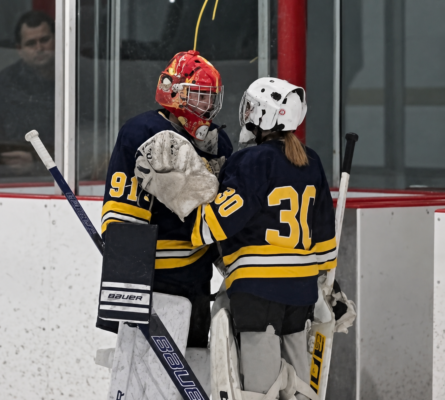
While this is a special shout out to all goalies, the same principle applies to all players.
Between Period Snacks Hockey Parents Swear By: The Tip From the Book
Face-offs demand reaction speed and focus. Low energy = slower reactions.
This is different from the full pre-game meal in Part 1. That meal builds the tank. This is the top-up: a small, fast-digesting carb hit right before the game or between periods that keeps the tank from running empty in the third, when the game is usually decided. For a goalie, who never leaves the ice, the between-periods top-up isn’t optional. It’s the only refuel she gets. These between period snacks hockey teams actually use are built for exactly that thirty-second window.
And if you watched the Olympics earlier this year, you may have seen Hilary Knight, on her way to a gold medal with Team USA, squeezing an applesauce pouch between periods. That’s not a kids’ snack. That’s the best player of her generation doing exactly what this tip says: quick, natural carbs, nothing heavy, right when the game is about to be decided. If it’s good enough for the bench in Milan, it’s good enough for a Squirt goalie bag.
Between Period Snacks Hockey Players Actually Use (From the Book)
- 🟨 Banana
- 🟨 Applesauce
- 🟨 Granola bar
- 🟦➕ Small sports drink
Notice what’s not on the list: nothing heavy, nothing high in protein or fat, nothing that needs real digesting. These are the quick, natural-sugar carbs from the carbs post, in a portion small enough to be gone by the time the Zamboni is off the ice.
What’s Also Not on the List: Energy Drinks
This one comes up in every locker room by Bantams, so it’s worth saying plainly. The book’s appendix is clear that energy drinks are not recommended for kids or teens. They don’t create real energy, they only stimulate the nervous system, and the caffeine and sugar can disrupt sleep, increase anxiety, and hurt recovery. A kid who’s wired isn’t a kid who’s fueled. Real energy comes from food, water, and sleep. A banana between periods beats a can of anything, every time.
HealthyChildren.org, from the American Academy of Pediatrics, backs this up: avoiding caffeine is the best choice for kids, and there is no biological need for it in a young athlete’s diet.
What It Looks Like in Our House
A small “between-periods kit” lives in the goalie bag: a banana, an applesauce pouch, an ALOHA bar or a couple of the energy bites below, and a full water bottle with a long straw, because a goalie drinks through the mask without taking it off. Whatever gets used gets replaced after the game. Nobody has to remember anything on game day, and she reaches for it on her own once it’s always there. On tournament weekends, with three games in two days and a goalie who plays every minute of all three, that kit does more work than anything else in the bag.
Between Period Snacks Hockey Recipe: No-Bake Energy Bites
Make a batch on Sunday, grab two before every game. No oven. This is the one my girls have made for teammates, which is the highest compliment a recipe gets.
You need:
- 1 cup rolled oats 🟨
- ½ cup peanut butter (or sunflower seed butter if your team is nut-free) 🟧🟥
- ⅓ cup honey 🟨
- ¼ cup mini chocolate chips or raisins 🟨🟪
- Optional: 2 spoons ground flax or chia seeds 🟧
- A big bowl and a spoon
Steps:
- Put everything in the bowl and stir until it’s one sticky mixture. Too dry, add a little more honey; too wet, add more oats.
- Wash your hands, then roll the mixture into balls about the size of a golf ball. You’ll get 12–15.
- Put them in a container with a lid and refrigerate 30 minutes so they firm up.
- Keep them in the fridge. Two go in a zip bag in the hockey bag on game day.
Quick carbs from the oats and honey, a little fat and protein to hold you over, and easy to eat in thirty seconds between periods.
Quick rule for between period snacks hockey players need: fast energy fuels fast reactions.
FIND. A. WAY.
Anika
Every week of the Hockey IQ book ends with a nutrition tip like this one, plus a full Nutrition IQ appendix at the back. Get the book · Back to Athlete Nutrition
